We’d like to thank dr. Jan de Maere for his expertise.
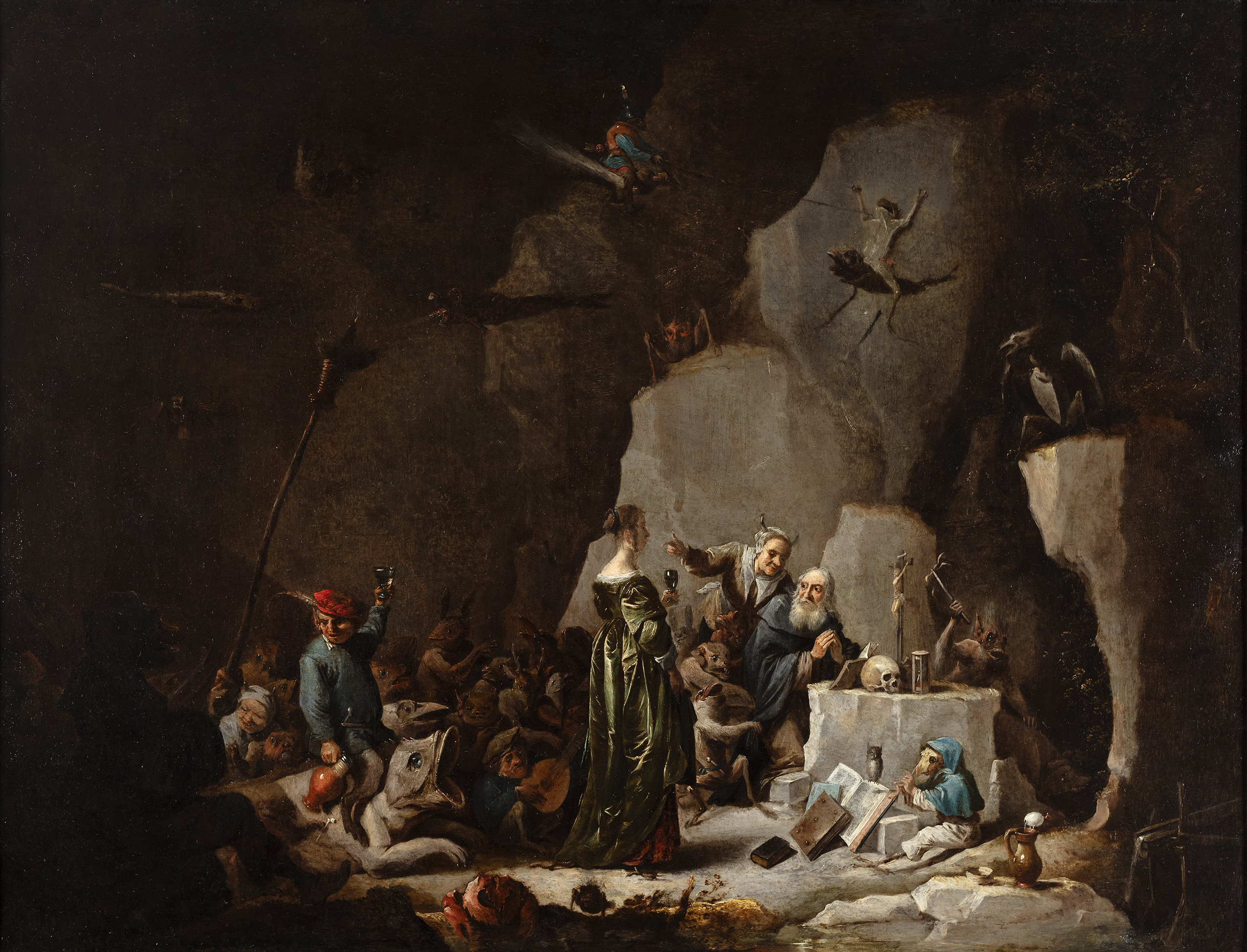
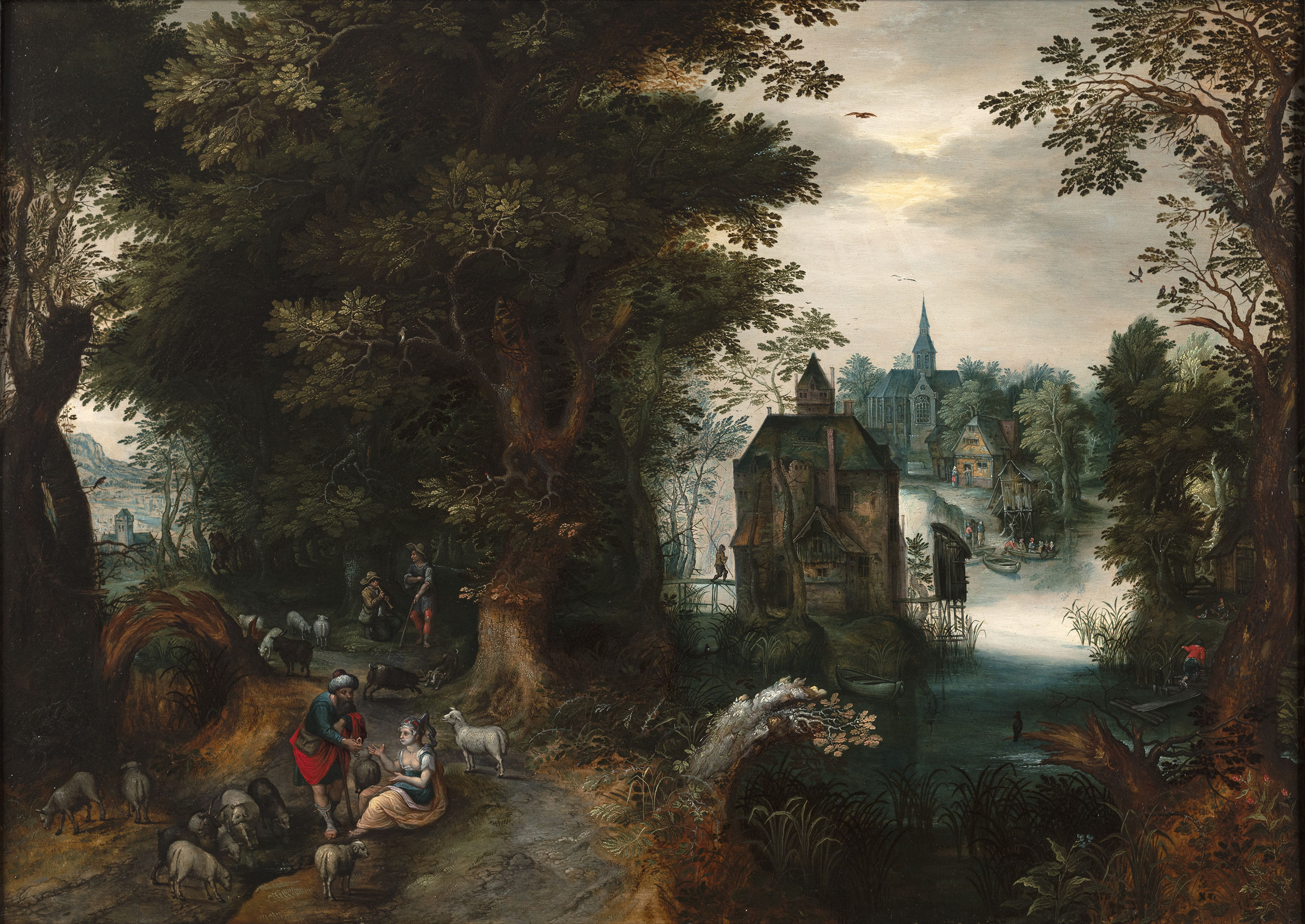
This compelling composition, “The Temptation of Saint Anthony,” represents one of the most enduring subjects in Flemish art. The story recounts how Saint Anthony the Great, a third-century Egyptian hermit and founder of Christian monasticism, was tormented by visions sent by the devil during his spiritual retreat in the desert. In de Keuninck’s version, the saint stands at the threshold of a shadowy forest cave, illuminated by a supernatural light symbolizing divine protection. Surrounding him are grotesque demonic figures, half-human and half-beast, who tempt and assault him with chaotic energy. The contrast between the saint’s calm devotion and the surrounding frenzy encapsulates the eternal struggle between faith and temptation, light and darkness.
De Keuninck’s distinctive style is evident in the architectural structure of the landscape—a fusion of rocky grottoes, twisted trees, and distant horizons—enhanced by his dramatic use of chiaroscuro. The composition is both moral allegory and visual spectacle, showcasing the artist’s mastery of fantasy and form.
This Temptation of Saint Anthony exemplifies de Keuninck’s ability to merge mysticism, landscape, and theatricality, offering a deeply spiritual vision that resonates within the broader Counter-Reformation tradition of seventeenth-century Flanders.
Exhibition
Literature
Thank you! Your submission has been received!
Oops! Something went wrong while submitting the form.